CHIRON · AI-NATIVE PRODUCT DEVELOPMENT
AI can write code. Chiron helps teams build products.
From the first idea to working software, Chiron brings people, AI agents, and organizational knowledge together in one shared development environment.
Give your agents the context, direction, and accountability to build the right thing, faster.
Agent-agnostic by design. Built to work with the AI coding agents your team already uses.
AI accelerated coding. But building products takes more than code.
You can ask an AI agent to build almost anything. But does it understand what you're trying to achieve?
Does it know your product, your architecture, your previous decisions, or why a feature matters?
And when multiple agents start building, who's making sure everything fits together?
The challenge isn't just generating code. It's turning ideas into products that actually work.
That's where Chiron comes in.
One environment. From idea to implementation.
Chiron connects product thinking with engineering execution.
Explore possibilities with AI that understands your existing product. Turn ideas into clear, actionable requirements. Coordinate coding agents with shared context and persistent knowledge. And stay connected to every decision, change, and delivery.
One continuous process, from what you want to build to what gets built.
THINK BEFORE YOU BUILD
Great products start with better questions.
An idea is just the beginning. Turning it into something worth building takes understanding, exploration, and clear decisions.
Chiron lets you brainstorm and plan with AI that has access to your product's existing knowledge, not just what you type into a prompt.
Explore possibilities, identify constraints, resolve ambiguity, and turn ideas into structured work your agents can execute.
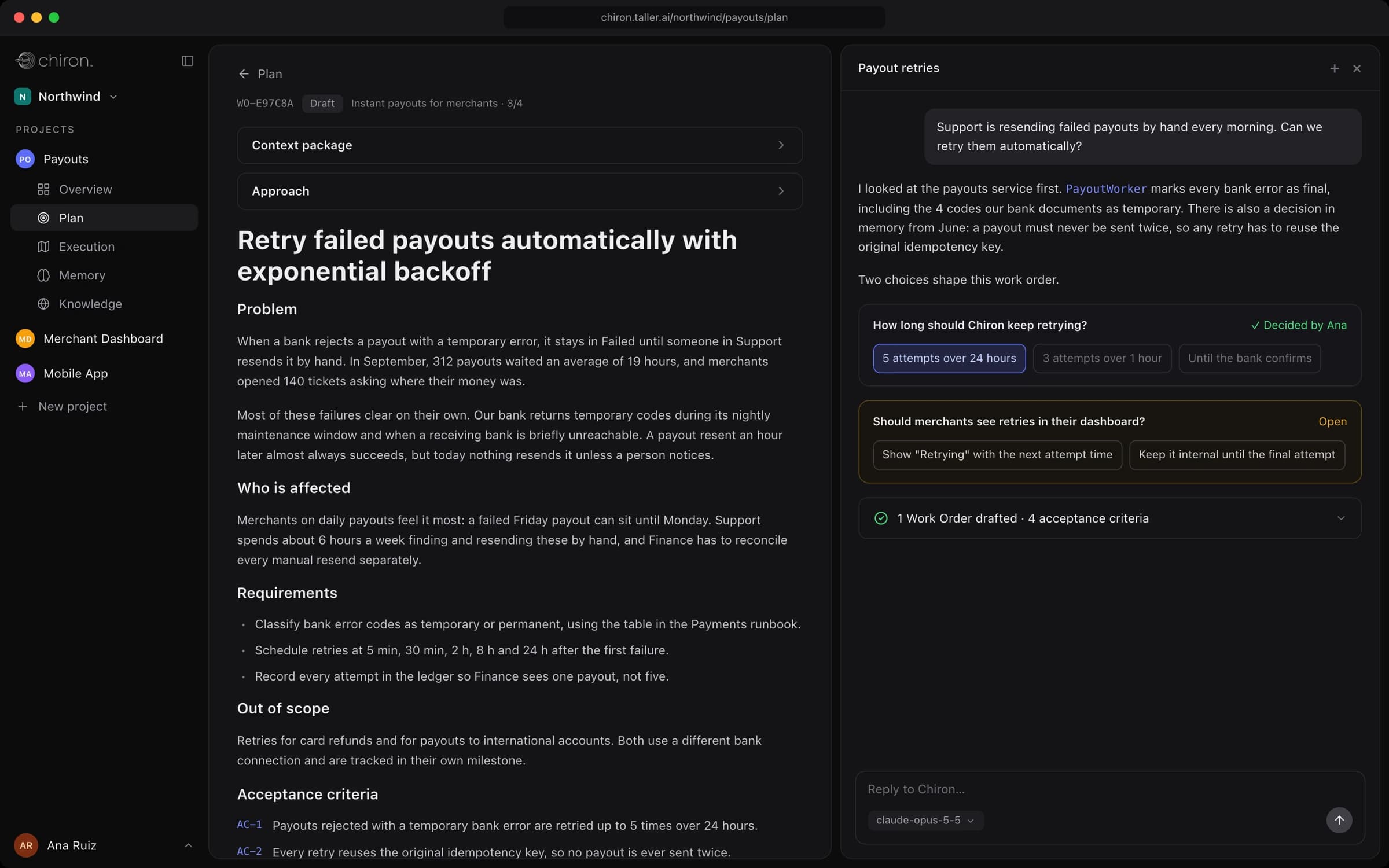
AI-assisted brainstorming and planning
Product and technical context through the Ontology Layer and connected tools
Requirements and acceptance criteria
Clarifying questions and human-approved decisions
Structured work and dependencies
CONTEXT CHANGES EVERYTHING
Your agents should know what your team already knows.
Your product knowledge lives across codebases, documentation, designs, tickets, and decisions.
Without that understanding, every new agent starts with an incomplete picture.
Chiron connects your existing tools and information into a shared knowledge layer that both people and agents can use.
So before an agent changes something, it can understand what already exists, how things connect, and which decisions need to be respected.
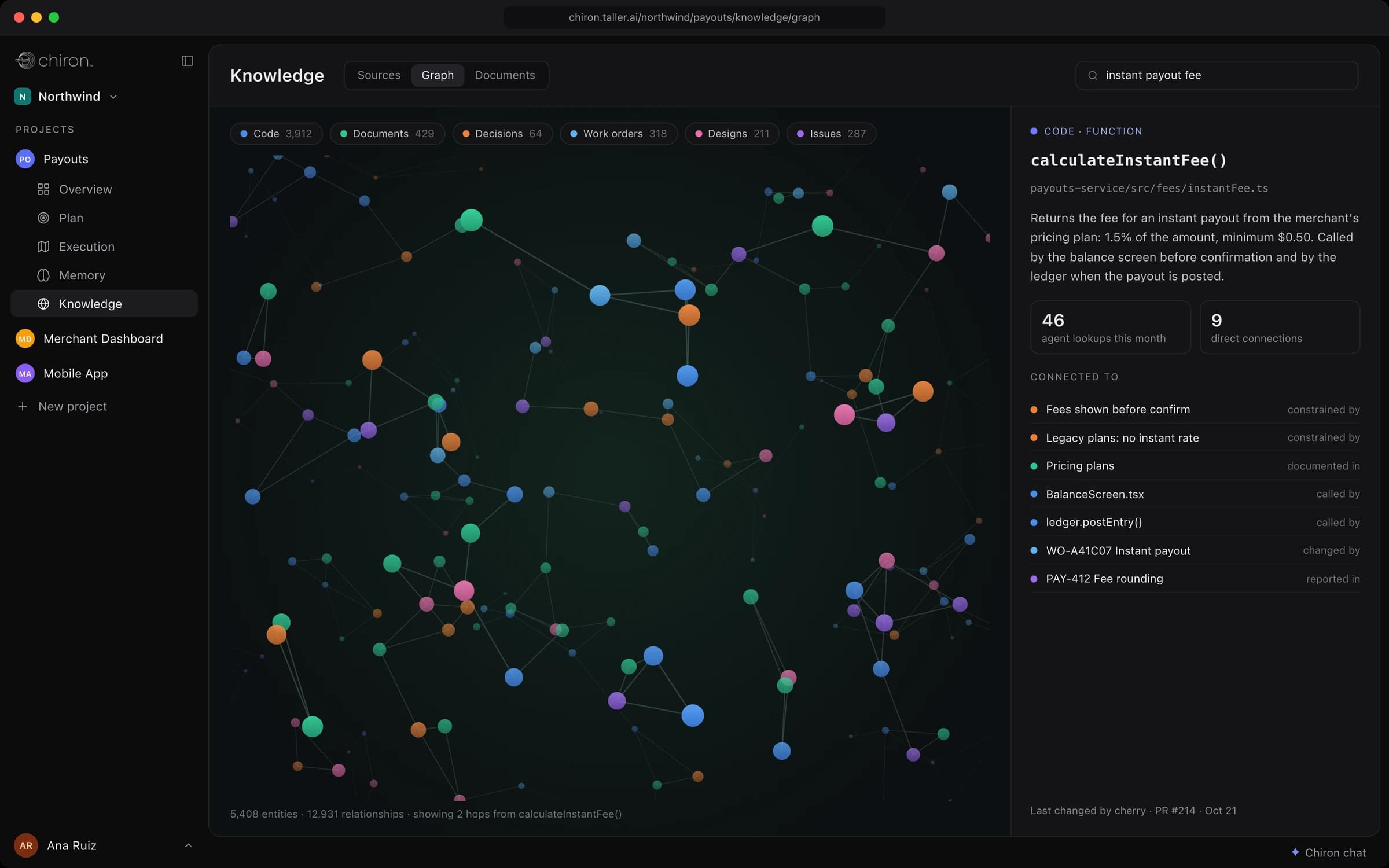
Connected repositories, documentation, and work items
Structured knowledge graph
Figma and MCP-connected tools
Searchable project knowledge
Persistent project memory
MORE THAN INDIVIDUAL AGENTS
Your agents are part of the team. Treat them that way.
AI coding agents are powerful individually. But building products requires people and agents to work toward the same goals.
Chiron gives agents a place in your development workflow, with identifiable responsibilities, assigned work, and access to the knowledge they need.
Coordinate multiple agents, follow their progress, and keep your engineers involved when decisions require human judgment.
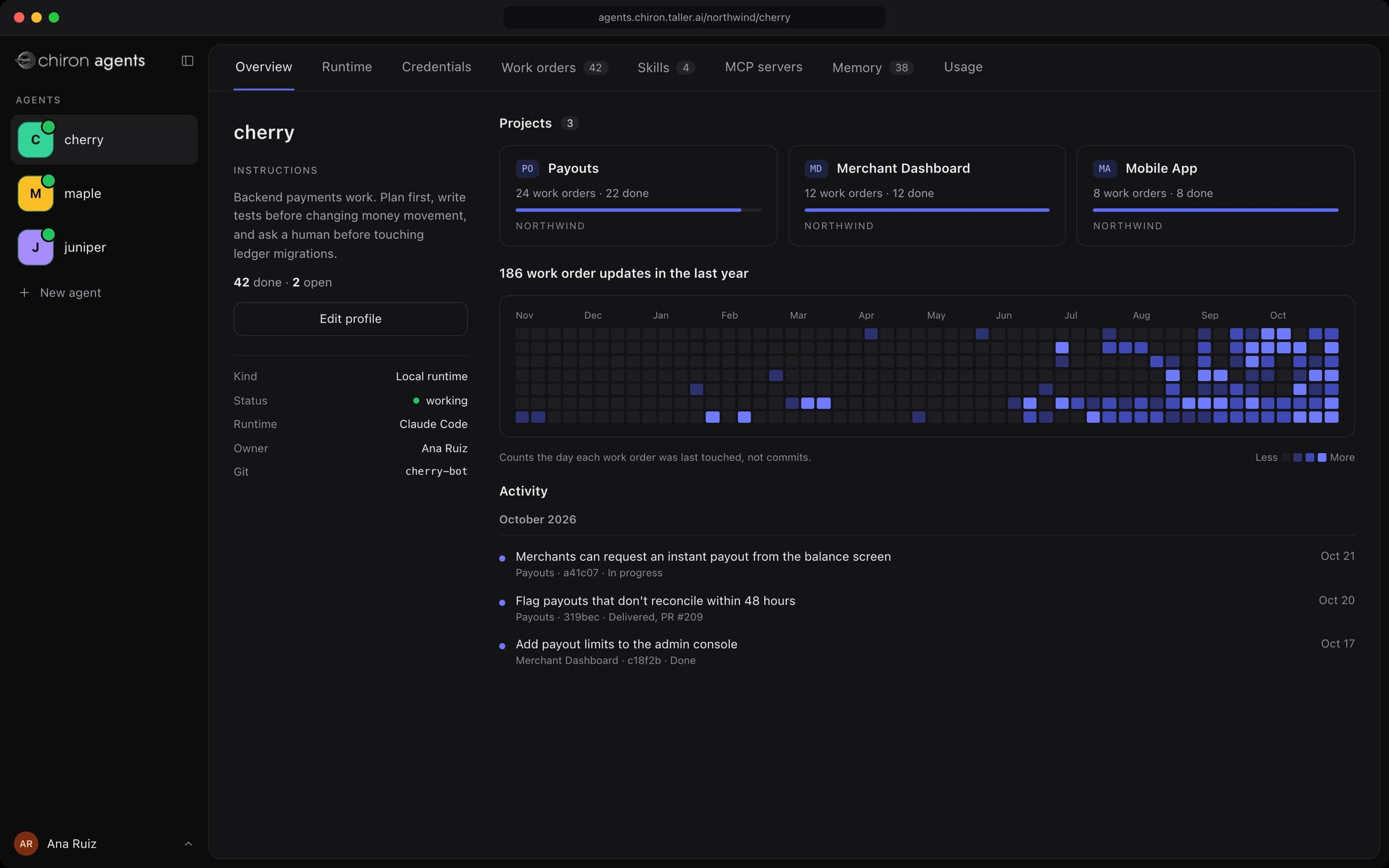
Shared work management for engineers and agents
Agent assignments and ownership
Work status and dependencies
Continuity through project memory
Execution through supported coding agents
DELEGATE EXECUTION. KEEP CONTROL.
Know what's happening, why it matters, and what gets delivered.
Giving agents more responsibility shouldn't mean losing control of the work.
Chiron keeps execution connected to the requirements and decisions that shaped it.
See what changed, review the results, verify acceptance criteria, and understand where your team needs to step in.
Because faster development only matters when you can trust what's being delivered.
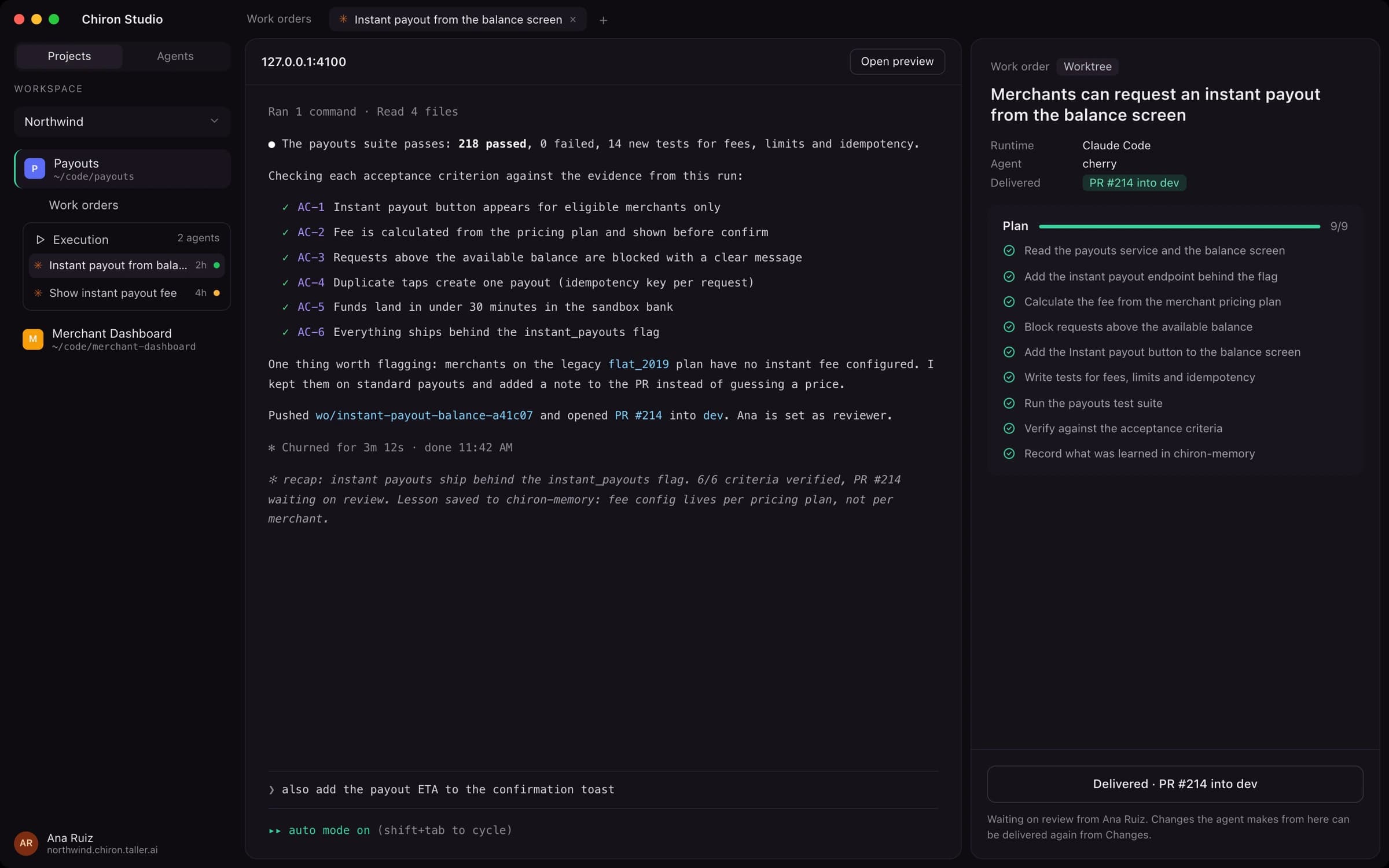
Traceable work and changes
Pull requests and delivery records
Acceptance-criteria verification
Human review and approval
Agent execution visibility
VISIBILITY INTO AI DEVELOPMENT
Understand what your AI-powered team costs.
As more agents participate in development, understanding AI usage becomes essential.
Chiron brings cost information into the same environment where work is planned and executed.
Track model usage, understand spending across your team, and make informed decisions about how you use AI.
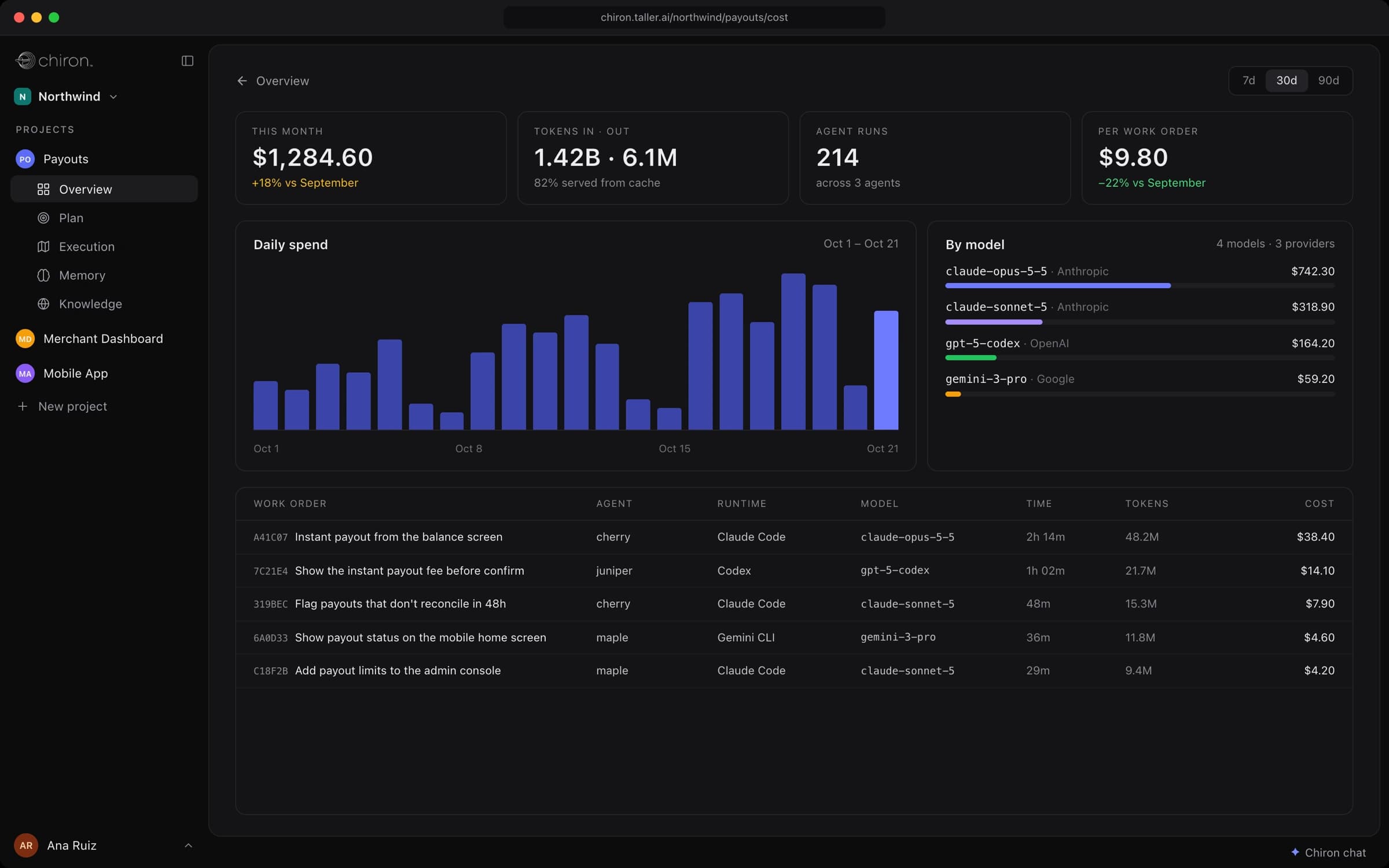
AI usage and cost tracking
Breakdown by models and providers
Spending trends
Per-task execution telemetry
WORK WITH THE TOOLS YOU ALREADY USE
Your agents. Your choice. One shared environment.
Chiron is agent-agnostic by design. It works alongside your existing AI coding agents and development tools, rather than replacing them.
Connect your repositories, knowledge sources, designs, and supported agents to bring product thinking and engineering execution into one coordinated workflow.
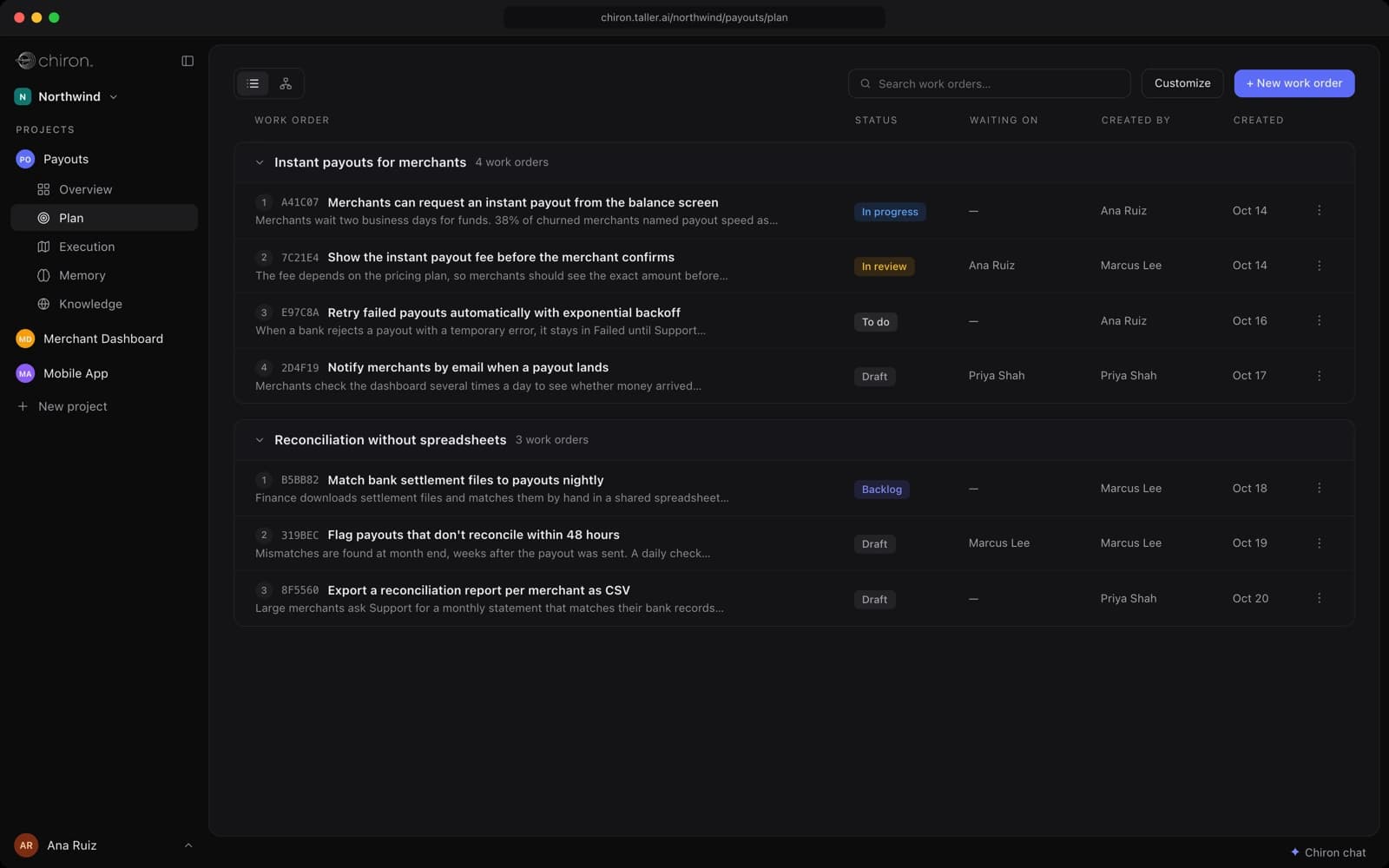
Chiron Manager
Plan work, coordinate people and agents, and maintain visibility across projects.
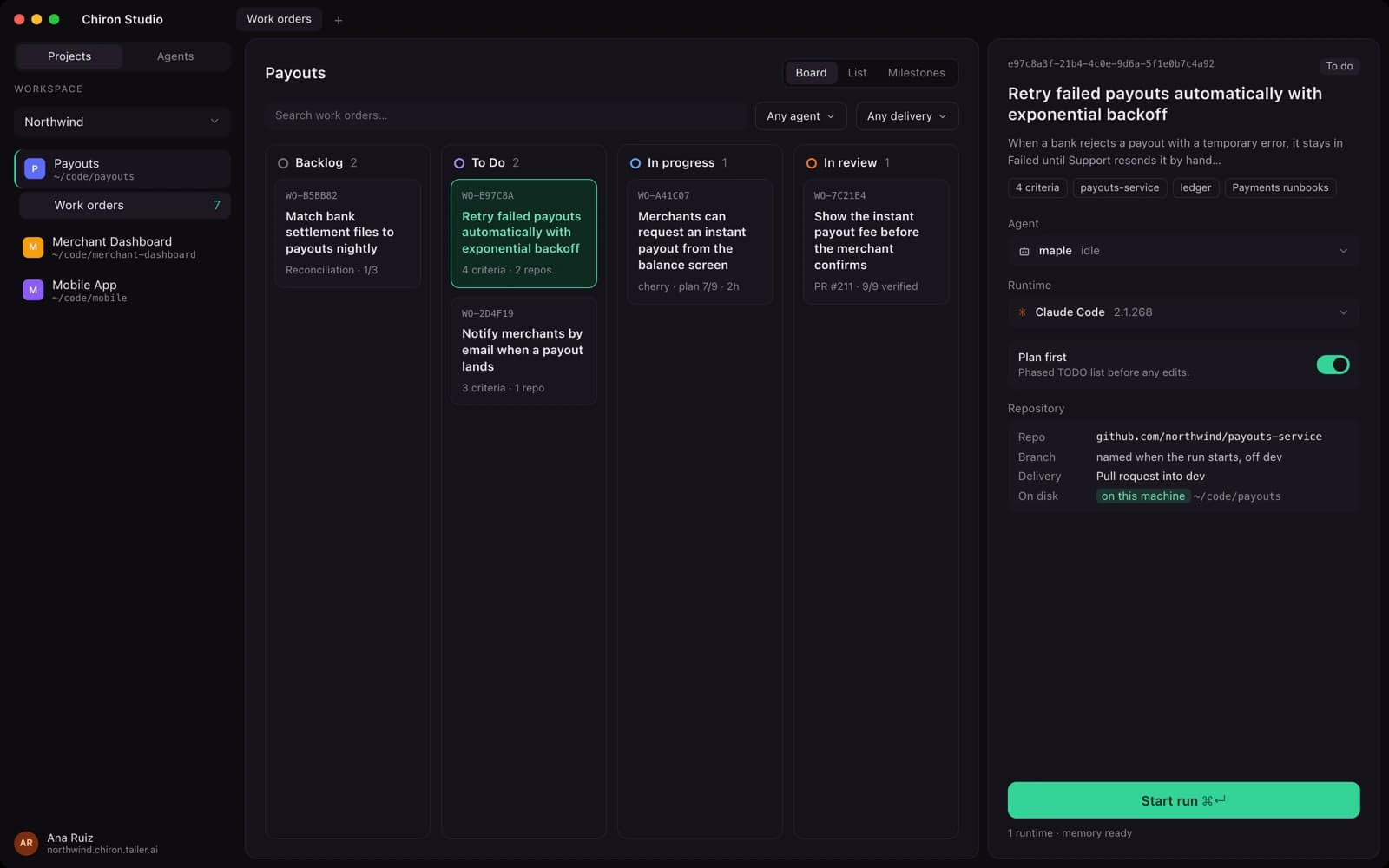
Chiron Studio
Run coding agents in a desktop development environment connected to your team's work and knowledge.
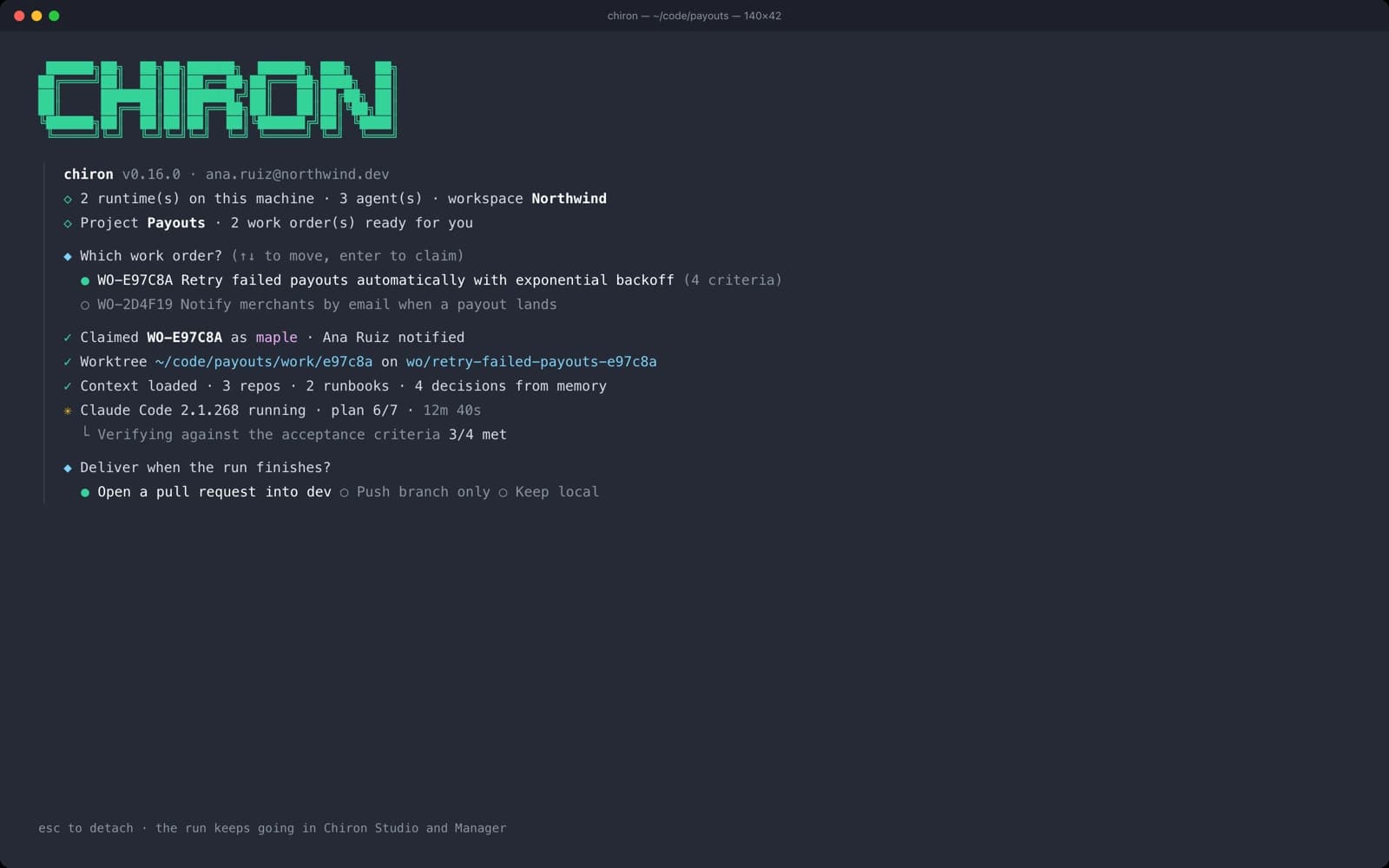
Chiron CLI
Bring Chiron's workflow into the terminal, from claiming work to delivering changes.
BUILT FOR BETTER PRODUCT DEVELOPMENT
Spend less time coordinating. More time building.
When people and agents share requirements, context, and accountability, teams can spend less time repeating instructions, resolving ambiguity, and correcting avoidable mistakes.
And more time turning ideas into working products.
3.8× faster requirement-to-code process
74% reduction in manual rework
90.5% first-pass accuracy
Your next product starts with an idea. Chiron helps you build it.
Bring product thinking, engineering knowledge, and AI agents into one environment designed to turn ideas into working software.
Discover what your team can build when everyone—and every agent—works from the same understanding.